




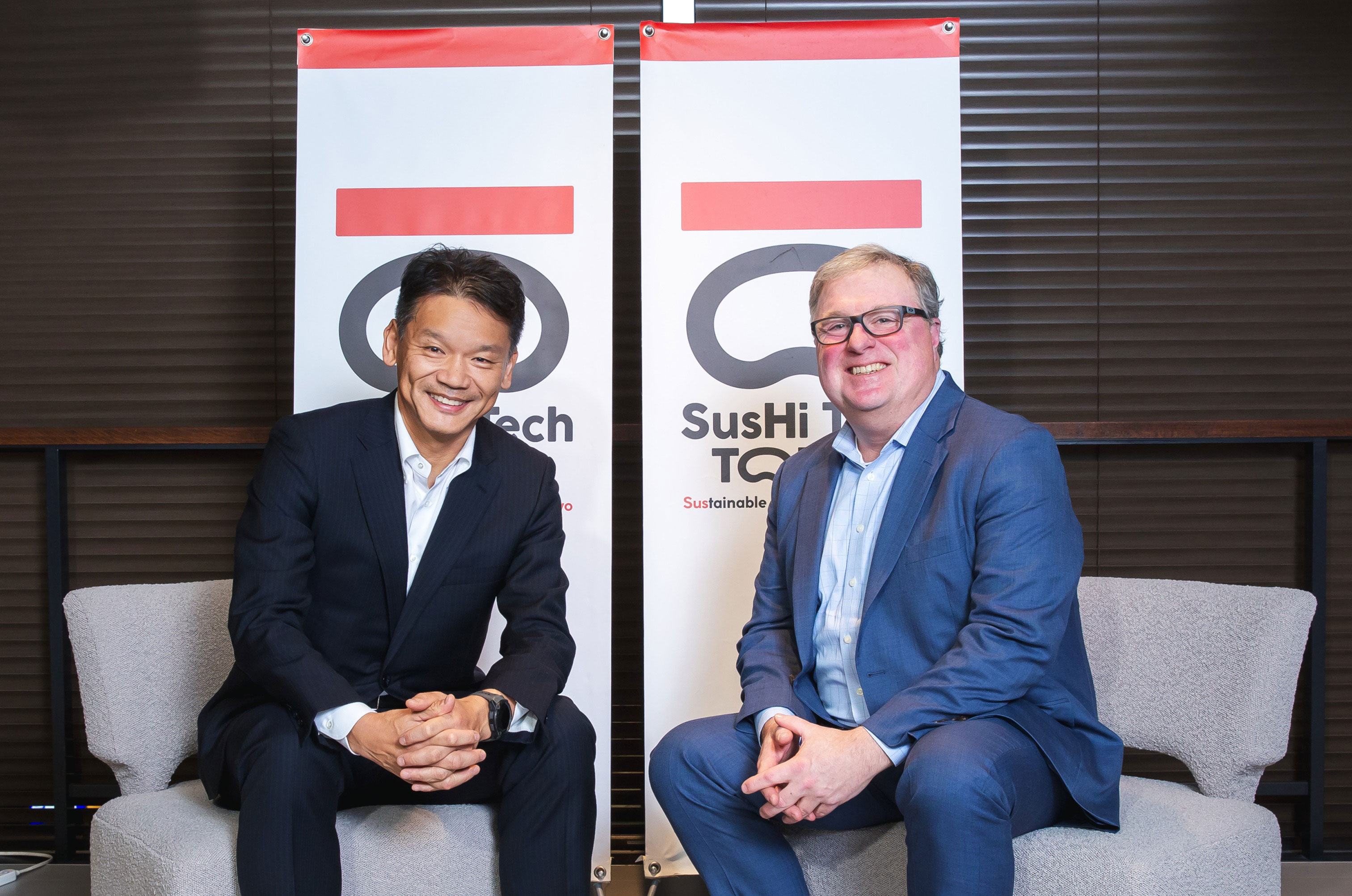
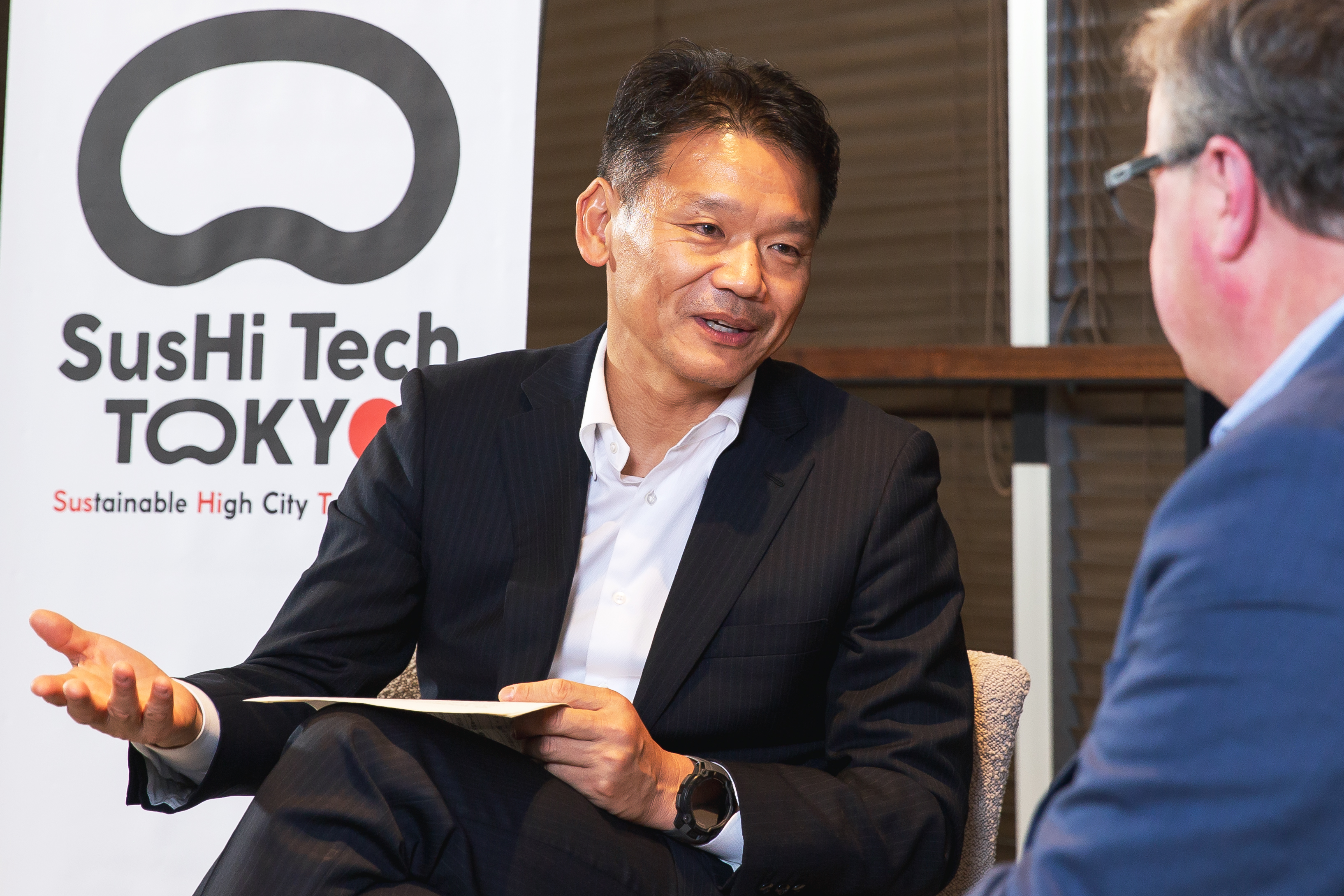
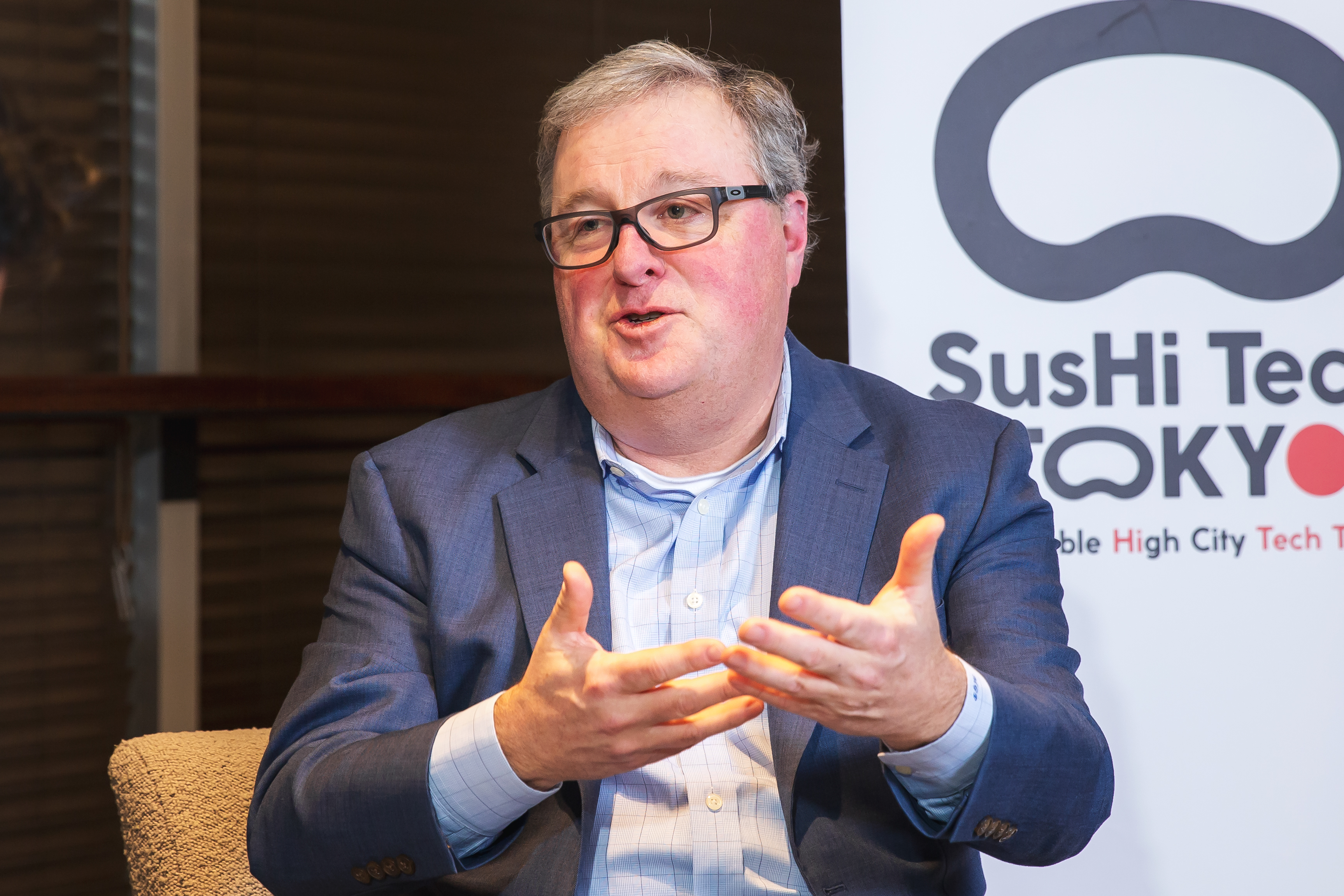
Vice Governor Miyasaka Manabu discusses Japan's startup potential with Michael Phillips, Executive Managing Director for Asia Pacific at Alumni Ventures.
-
In 2025, Alumni Ventures became the first of the top 20 U.S. venture capital firms to establish a full-scale presence in Japan, officially incorporating the firm’s Japan office on December 24. Leading this strategic expansion is Michael Phillips, the firm's Executive Managing Director for Asia Pacific, who has taken the helm in launching the Japan operation. Vice Governor Miyasaka Manabu of the Tokyo Metropolitan Government sat down with Phillips for this exclusive interview to explore why global investors are increasingly drawn to Japan's dynamic startup ecosystem, what makes SusHi Tech Tokyo a game-changer, and the transformative opportunities that lie ahead for entrepreneurs and innovators in Tokyo.
- ―――Why Tokyo? Government Commitment and Cultural Transformation
- Vice Governor Miyasaka: Mr. Phillips, welcome to Tokyo! You are leading the launch of Alumni Ventures' Japan office as the firm's Executive Managing Director for Asia Pacific—making Alumni Ventures the first among the top 20 U.S. VCs to make a full-scale entry into the Japanese market. On behalf of the entire Tokyo Metropolitan Government, I want to say we are thrilled to have you here.
- Mr. Phillips: Thank you so much for the warm welcome. It's really exciting to be here in Japan and to receive such an incredible reception. I'm genuinely looking forward to working with everyone here and contributing to what I believe will be one of the most dynamic startup markets in the world.
- Vice Governor Miyasaka: That's wonderful to hear. Among all the potential markets in Asia, why did Alumni Ventures choose Tokyo as your regional base? What factors made Japan stand out?
-
Mr. Phillips: About a year and a half ago, I began evaluating where we should expand in Asia, and Japan immediately stood out. The fundamentals are compelling—a large, sophisticated economy with exceptional technical capabilities, world-class patent expertise, political stability, and a strong partnership with the U.S. What truly surprised me was something I hadn't anticipated: the extraordinary level of government commitment to building a venture capital ecosystem.
The Tokyo Metropolitan Government, METI, JETRO, and Japan’s Cabinet Office—all of these institutions have done deep, thoughtful work to understand what the ecosystem needs and are actively implementing changes to support it. I've also been impressed by the large corporations that have been supporting the ecosystem for years. They're now recognizing past limitations—there have been many smaller exits, but not many unicorns yet. These corporations want to help achieve more ambitious outcomes. And the university systems are really eager to commercialize their deep tech innovations.
But the most critical factor is the cultural shift I'm witnessing among Japan's younger generation. They're embracing entrepreneurship and risk-taking in ways that remind me of what happened in the U.S. When I graduated college, working for a startup wasn't even considered an option—you went to a large corporation or government. But after Silicon Valley's success in the 2000s, that pathway opened up, and now it's a primary aspiration for young talent. Japan is experiencing that exact same transformation right now, and that human capital shift is what builds the foundation for explosive growth. - Vice Governor Miyasaka: I completely agree. We're seeing this entrepreneurial energy firsthand through initiatives like TOKYO STARTUP GATEWAY, Japan's largest startup competition, which we've hosted annually since 2014 for aspiring entrepreneurs aged 15 to 39. In 2025, high school and university students accounted for approximately 60% of all participants. For these young people, founding or joining a startup has become a completely natural career path.
- ―――SusHi Tech Tokyo That Shaped Alumni Ventures’ Entry into Japan
- Vice Governor Miyasaka: Alumni Ventures participated in SusHi Tech Tokyo 2025, and I understand that experience was instrumental in your decision to establish operations here. As someone who helps lead this event, I'd love to know: what were your impressions, and what did you take away from it?
-
Mr. Phillips: SusHi Tech Tokyo exceeded all my expectations. The quality of the event was outstanding, and the diversity of attendees was remarkable—not just industry professionals, but everyday people wanting to learn about startups and innovation. The showcase format, with so many different elements happening simultaneously, created this incredible energy.
What really made an impact was the opportunity to meet and collaborate with people from Japan and around the world at different events—both conference sessions and evening networking. This gave us the chance to get to know each other and discover real common ground in terms of what we can accomplish in Japan. - Vice Governor Miyasaka: Thank you—that means a great deal to our team. We're committed to making each year even better. From your perspective as a global investor, what suggestions do you have for SusHi Tech Tokyo 2026?
- Mr. Phillips: Last year's event was terrific, and I'm extremely excited about this year. One thing I'd love to see more of is the opportunity to attend presentations from startups at various stages—seed, Series A, growth stage. I didn't get to experience as many of those sessions as I would have liked last year, so hearing directly from founders about what they're building and their vision would be very valuable.
- Vice Governor Miyasaka: That's excellent feedback—we'll definitely take that into consideration.
- ―――Beyond Business: Tokyo's Culture and Spirit
- Vice Governor Miyasaka: Now, Mr. Phillips, you've just begun your operations here, but I'm curious about your experience beyond business. What are your thoughts on Tokyo and Japan from a personal and cultural perspective?
-
Mr. Phillips: Honestly, Tokyo has become one of my favorite cities in the world. The culture, the people, and yes, absolutely the food—there's so much to explore and appreciate. What strikes me most is the spirituality that's woven into daily life here. The temples and shrines offer these extraordinary pockets of tranquility and reflection right in the middle of the urban environment.
And Tokyo's cleanliness and the respect that people show for the community—it's unmatched compared to other major global cities. I've been fortunate to visit several other Japanese cities as well. Every new place I discover just reinforces why I'm so happy to be based here.
- ―――Deep Tech Opportunities: Japan's Unique Advantages
- Vice Governor Miyasaka: I would like to delve a bit deeper into the investment potential within Japan's startup sector. Alumni Ventures is well-known for its focus on deep tech fields such as nuclear fusion, robotics, and advanced technology. How do you evaluate the current state of deep tech startups in Japan? Where do you see their strengths and potential? Additionally, are there any other sectors that have caught your attention?
-
Mr. Phillips: One of the advantages of our diversified approach is that we don't have to predict a single winning sector—we can identify potential across multiple domains. Energy and robotics, especially when combined with AI capabilities, are obviously compelling areas where Japan has deep expertise.
There are two other areas that I find interesting. First, entertainment technology—Japan has achieved global dominance in anime and manga, and when you marry that creative strength with AI, the possibilities are extraordinary. I can't predict exactly what will emerge, but the potential is massive.
Second, Japan's aging population presents a unique opportunity. Japan is at the forefront of addressing challenges that other developed nations, including the U.S., will face in the coming decades. Solutions in housing, healthcare, mobility, and elderly care developed here won't just serve Japan—they'll be exportable globally. That's a significant competitive advantage. - Vice Governor Miyasaka: Those are fascinating insights. As you mentioned, the intersection of entertainment, AI, and technology is definitely one of Japan's distinctive strengths. Is this area attracting significant global attention and investment?
- Mr. Phillips: Absolutely. We're seeing promising developments in South Korea and the U.S. The entertainment landscape is evolving beyond traditional gaming, movies, and music into immersive experiences—think 3D virtual worlds and next-generation interactive content.
- Vice Governor Miyasaka: Could you share which specific sectors Alumni Ventures is actively evaluating for investment? I know some details may be confidential, but any guidance would be helpful for our startup community.
- Mr. Phillips: We're definitely focused on the energy sector, as well as automotive and AI-related applications. Health tech and biotech opportunities are also on our radar. Unfortunately, I can't mention specific companies at this stage, but those are the primary sectors where we see strong potential and alignment with Japan's capabilities.
- ―――Advice for Japanese Entrepreneurs: Focus and Education
- Vice Governor Miyasaka: From your vantage point as a global VC, what do Japanese entrepreneurs and the broader startup ecosystem need to do to achieve the next level of success and international recognition?
-
Mr. Phillips: When we evaluate early-stage companies, we focus on three things: the team, their commitment, and the problem they're solving—plus their approach to solving it. For Japanese entrepreneurs, the most important thing is maintaining laser focus on solving a real, meaningful problem. That should be the primary obsession.
Where Alumni Ventures can add value is in education—helping Japanese startups understand what U.S. VCs look for in terms of business practices, financial reporting standards, and growth metrics. It's about helping them communicate their value in a language that resonates with global investors.
- ―――SusHi Tech Tokyo 2026 and Long-Term Collaboration
- Vice Governor Miyasaka: This year, you'll attend SusHi Tech Tokyo 2026 as an established player in Japan's ecosystem and as a key partner. What are you most excited about for SusHi Tech Tokyo 2026?
- Mr. Phillips: I'm incredibly excited about the event and the opportunity to welcome investors, entrepreneurs, and innovators to Tokyo—some who are already here and many who will be coming specifically for SusHi Tech. But what's fundamentally different this year is my position. I'll be living in Tokyo. I'll have an office here. That means after the event ends in late April, I can continue those conversations in May, June, July, and throughout the year. Being physically located here changes everything.
- Vice Governor Miyasaka: What message would you like to share with entrepreneurs, aspiring founders, and anyone interested in participating in SusHi Tech Tokyo 2026?
-
Mr. Phillips: I want to express our deep appreciation to the Tokyo Metropolitan Government and all the partners who have worked so hard to build SusHi Tech and support the growth of this ecosystem. The level of commitment and execution is truly impressive.
To everyone in the startup world—whether you're a founder, an investor, a stakeholder, or you're just figuring out how you want to contribute—I encourage you to engage with us. Come talk to Alumni Ventures. We want to get you into our network, share our experience, and explore how we can support your ambitions. - Vice Governor Miyasaka: Thank you, Mr. Phillips.
- ―――Tokyo's Next Chapter as a Global Startup City
-
Vice Governor Miyasaka: I want to share our vision with the global business community. Tokyo has long been celebrated as the premier destination for travelers—known for exceptional cuisine, safety, and culture. But our ambition is bigger: we want Tokyo to also be recognized as the world's best city for startup founders, investors, and innovators.
The Japanese government shares this vision, and together, we're committed to transforming Tokyo into a city where there is great “umami” not only in SusHi, but also in business opportunities. We want the world to know: Tokyo delivers on both. - Mr. Phillips: SusHi Tech—I love it! That perfectly captures what's happening here.
- Vice Governor Miyasaka: Exactly. And that's why Alumni Ventures' success in Japan is so important—not just for your firm, but as proof that global leaders can thrive here. Please don't hesitate to reach out if you encounter any challenges. We're here to support your success.
- Mr. Phillips: Thank you. We're ready to make this work.
- * According to TIME Magazine's "America's Top Venture Firms" list (2025). Source: https://www.av.vc/
- ―――What is SusHi Tech Tokyo?
- SusHi Tech Tokyo is a global innovation conference where key players—including startups, investors, large corporations, city officials, and academic institutions—gather from around the world to realize sustainable cities through high technology (Sustainable High City Tech, or "SusHi Tech"). This initiative is organized by the Tokyo Metropolitan Government in collaboration with various economic organizations and ecosystem players.
- About Miyasaka Manabu
- Miyasaka Manabu serves as Vice Governor of Tokyo. He joined Yahoo Japan Corporation in 1997 and served as its President and CEO in 2012, followed by Chairperson of the Board in 2018. After leaving the company, Miyasaka was appointed as Executive Policy Advisor to the Tokyo Metropolitan Government in July 2019 and became Vice Governor in September of the same year. Reappointed in September 2023, he currently spearheads the digitalization of Tokyo's administration as Chief Information Officer (CIO). Since September 2023, he has also served as the Representative Director of "GovTech Tokyo." Furthermore, he is actively working on strategies to make Tokyo the world's most startup-friendly city and serves as the Chairperson of the Executive Committee for SusHi Tech Tokyo, Asia's largest global innovation conference.
-
About Michael Phillips - Michael G. Phillips serves as Executive Managing Director for Asia Pacific, Chief Legal Officer, and Chief Operating Officer at Alumni Ventures. With more than 25 years of experience in law, finance, and investment management, Phillips has led legal and business teams across major financial institutions and startups. At TIAA/Nuveen, he helped grow the asset management business to over $900 billion in assets under management. He co-founded an innovative investment advisory platform focused on infrastructure projects and practiced law at major U.S. law firms, including Faegre Drinker and Richards Layton.